
Welcome
My name is Liane Smith and I am a qualified person-centred counsellor providing both short- and long-term weekly therapy to adult individuals in North London.
I orientate my affirmative and inclusive practice to the Gender, Sex/Sexuality, Relationship Diversity (GSRD) community of which I am part.
It is culturally and neurodiverse aware, and recognises that we all have intersecting rights and oppressions in our lives that constantly evolve.
My therapy is about connecting with you acceptingly and warmly, seeing and hearing you, and understanding your difficulties. You can explore your personal issues gently and safely, in the direction and tempo that you choose.
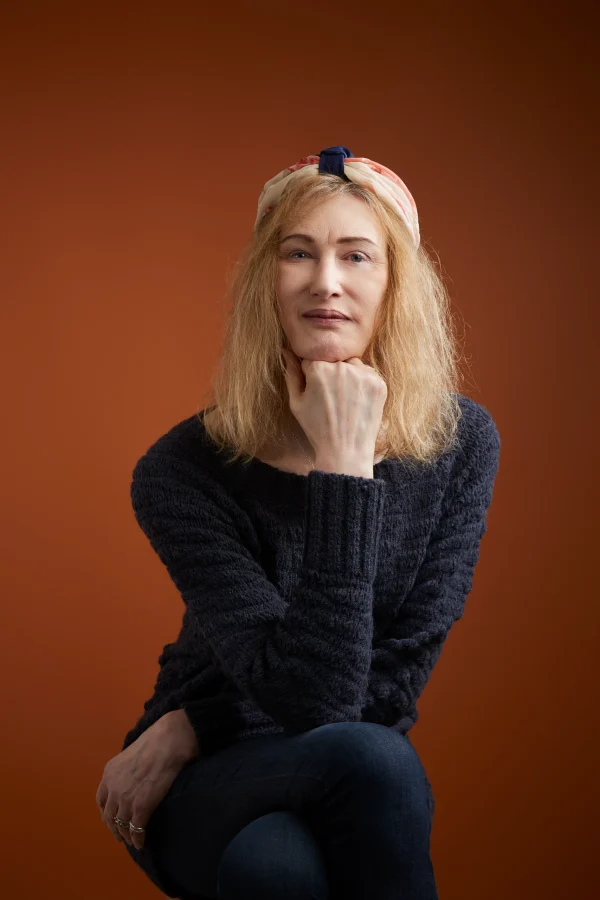
Photo by Christa Holka
About Me
I am a softly-spoken Scottish white non-disabled trans woman (she/her) who has lived and worked in London for many years with cosmopolitan friendships and connections. My sexuality, I would describe as ‘varied’, as in the mix there seems to be asexuality, lesbian/queer, and kink. My interests are ballet and contemporary dance, listening to music, books, art exhibitions, and cinema.
I have had the privileges of a university education and a long professional career as a chartered surveyor (MRICS) in the fast-paced commercial real estate sector. Becoming openly gender non-conforming in an environment of gradually developing DEI in the 2000s, then transitioning, showed me the vitality of accepting and becoming my genuine self, as well as the value of unconditional support by those I trusted.
Trauma challenges brought me to therapy in the 2010’s, warily due to previous negative therapy experiences. Etched into my mind, that first encounter with my lesbian person-centred therapist - authentic, accepting, listening to and hearing me - a delicate seed that in time blossomed into my growth, and openness to who I might become, based on my choices, and my training and ongoing learning as a therapist.
The words Gender, Sex/Sexuality, and Relationship Diversity (GSRD) affirmatively embraces the breadth of gender, sex and relationship identities and lifestyles that lie outside the predominant norm. I am part of the varied LGBTQIA+ community, with all its gender and sex expansiveness and non-conformity, and have connectiveness with the kink and sex worker communities.
If you identify as part of one or more of these communities, you may find it helpful to choose a therapist who is part of the same community and/or understands GSRD identities. I strive to ensure that multicultural sensitivity, awareness of systemic racism, gendered power imbalances and sexual abuse, and neurodiversity also inform my practice.
Acceptance, equality, and inclusion of, and social justice for, GSRD and other minority / marginalised communities is at most a thin surface-layer today, and one where we see gaps, stresses, and new fractures appearing, including continual microaggressions and projects to reduce our hard-won human rights.
My therapy room is an ethical GSRD-affirmative space informed by my training, knowledge, and life experience with warm acceptance and no aims. It is where we can safely explore the dilemmas and challenges that are negatively impacting you, often complicated by many of life’s intersections that you continually criss-cross. I recognise that we all want to live authentically as the person who we are or can come to be.
The Person-Centred Approach

Person-Centred therapy is a relational, non-judgemental opportunity to reflect on and explore your inner thoughts, feelings, and emotions and the meaning these have for you. As well as talking about your present troubles, it might include your past experiences and challenges, and your future hopes in life. We may feel and respond to experiences as we do, which we may see as unhelpful, for appropriate reasons.
The person-centred approach (PCA) recognises you as the expert on your unique life and experiences. It is a dialogue between us that can help you reflect and originate your own choices and changes, and find openness to diversity of experiences.
The PCA also recognises that we live with and must find our way through societal pressures, conditions, and constraints, and structural power imbalances.
As a person-centred therapist, I hold no aims or objectives for you; I accept who you are unconditionally with warmth, and listen and try to accurately understand your reality and feelings from your point of view. We share the therapy space and co-create our dialogue at your speed and direction to aid deeper reflection and inner exploration of feelings and emotions, helping your self-awareness, creative possibilities, and choices to decide in which direction to move.
How can counselling help you?
I can help you with many different personal psychological challenges and co-challenges. Examples below are not exhaustive nor mutually exclusive, indeed, often we find that several challenges stem from events in our lives.
- Abuse including Physical, Psychological, and Sexual.
- Anxiety and Stress.
- Depression.
- Dissociation.
- Eating Disorders and Disordered Eating (first stage/recovery/past-experience).
- Exploring Cultural Differences, Racism, and Oppressions.
- Gender, Sex, Sexuality, and Relationship Diversity.
- Loneliness and Isolation.
- Loss, Life Change, and Bereavement.
- Relationships
- Self-harm and Suicidality.
- Self-worth and acceptance.
- Trauma and Post Traumatic Stress.
Location
• 309 Upper Street, Islington, London N1 2XQ.
• Angel (Northern Line) and Highbury & Islington (Victoria Line, Mildmay & Windrush) stations are c.10-12 minutes' walk.
• Upper Street - TFL Bus Routes 4, 19, 30, 43
Qualifications
• I trained at the Metanoia Institute and hold a BSc (First Class Honours) in Person-Centred Pluralistic Counselling (Advanced Practitioner), conferred by Middlesex University.
• I am a registered Member of the British Association for Counselling and Psychotherapy (MBACP) as of 2025.
• I am committed to ethical working under the BACP’s Ethical Framework for the Counselling Professions.
Fees
Initial free telephone call of 15 minutes to explore if we could work together.
Therapy Sessions: £75 per weekly session of 50 minutes.
Please note that I am unable to offer concession rates currently but hope to do so at a future date. If you have a restricted budget, it might be possible to agree on the number of sessions that you could afford to do.
Please note that if you want to cancel an appointment I require 48 hours’ notice; otherwise you will still need to pay for any sessions missed. I accept payment by bank transfer.
Get in touch
Feel free to contact me if you have any questions about how counselling works, or to arrange an initial assessment appointment. This enables us to discuss the reasons you are thinking of coming to counselling, whether it could be helpful for you and whether I am the right therapist to help.
If you would like to discuss starting therapy, please send me an email or a short message using the contact form above. I aim to respond to all emails within 48 hours.
Some frequently asked questions
To meet my ethical commitments under BACP’s Ethical Framework, it is important that we agree in writing how we will work together.
Before we start therapy, we will enter a counselling contract clearly explaining and setting out how we will collaborate.
I shall send you a copy of my contract before our first session. At our first session, I will set some time aside for us to discuss this agreement and answer any queries that you may have. I will ask you to sign the agreement to show that you understand its contents.
Counselling is a confidential process. It is essential to protect your confidentiality and privacy and save for few exceptions (see below), ensure no unauthorised disclosure to others of your personal details, content of counselling sessions, or any notes that I may make for my reflective practice and supervision. I will not breach your confidentiality except under limited circumstances and not without first discussing it with you and your written consent, unless it is inappropriate or impossible to do so. The circumstances are:
- I believe that your life or safety may be seriously at threat.
- You disclose any information that places others at risk of serious harm.
- There are statutory obligations under the law requiring disclosure.
- Client and statutory requests for data under the UK General Data Protection Regulation and Data Protection Act 2018.
Supervision is also a confidential process. Supervisors have a duty of confidentiality to both the supervisee and the supervisee’s clients. Discussions and any communications with my supervisor on my therapeutic practice and client work will be consistent with data privacy and the confidentiality agreement set out in the therapy contract between us.
Supervision is an essential ingredient of ethical working. Practitioners have a supervisor who provides professional oversight through mentoring, monitoring and enhancing the quality of their work, aiding with ethical dilemmas (should they arise), and ethical decision making. My supervision is regular and helps me to reflect on and take accountability for all aspects of my practice to make it as effective, ethical, and safe as possible. This includes taking responsibility for my own health and wellbeing so that I can be fully present and available to you in the therapy space.
I commit to working ethically, and wherever possible, collaboratively with my clients consistent with the current BACP Ethical Framework for the Counselling Professions. The Framework is a core contractual document that forms the basis of professional work for all members of the BACP.
Under the existing Framework, there are six ethical principles supporting ethical working and I always work with these in mind.
Being Trustworthy (honouring trust) | Autonomy (client’s self-governing right) | Beneficence (promoting wellbeing) | Non-Maleficence (avoiding harm) | Justice (fair & impartial treatment) | Self-respect (practitioner’s self-knowledge, integrity & self-care)
More information can be found here: BACP’s Ethical Framework
As part of working ethically, I am committed to my continuing professional development (CPD) as a practitioner and BACP member. This involves structured planning of my CPD that will keep my skills and knowledge up-to-date, and help the development of my skills and/or new learning in areas that can help improve and build my knowledge.